
By Brent Oberlink
Table of Contents
Key Takeaways
-
Kinetic flywheel technology lets DR RapidFire splitters cycle roughly six times faster than conventional hydraulic units, a major throughput advantage for high-volume firewood operations.
-
Unlike hydraulic models, DR RapidFire splitters use spinning flywheels to store and release energy in a single rapid stroke, eliminating the pump, hoses, and oil that cause most downtime.
-
Fast cycle times make these machines a productivity multiplier for storm cleanup, utility right-of-way work, and commercial firewood production.
-
Neglected fluid changes and worn seals are the top failure causes we see across crews in Illinois, North Carolina, and Utah, so catch them early with pre-shift inspections.
What Are DR RapidFire Log Splitters?
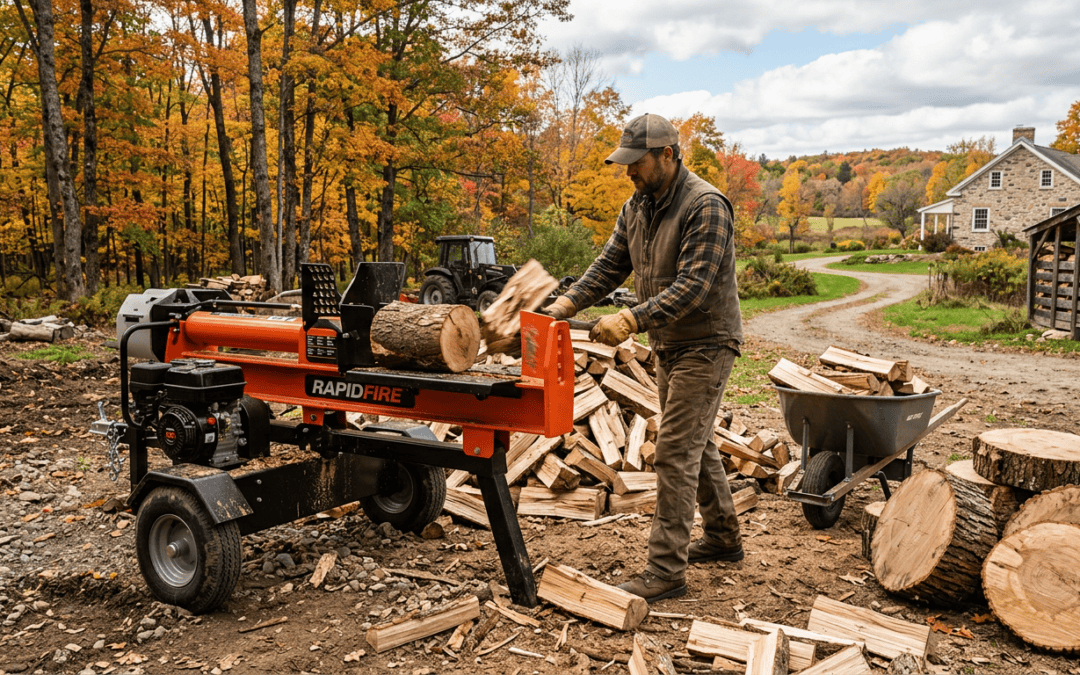
DR RapidFire log splitters are kinetic, flywheel-driven wood-splitting machines that store rotational energy in spinning flywheels and release it in a single rapid stroke to divide logs into firewood. Engineered for fast cycle times and high-volume work, they serve forestry crews, land managers, and firewood producers who must process large quantities of felled timber efficiently.
DR RapidFire log splitters matter because they address one of the most persistent bottlenecks in wood processing: turning felled timber into usable firewood quickly and safely. Kinetic splitters use a rack-and-pinion mechanism and heavy flywheels to deliver a fast return stroke, so operators spend less time waiting between cycles and more time moving material. For forestry, utility, and land-clearing crews, this speed translates directly into productivity on high-volume jobs. Consider storm cleanup: across the U.S. South, salvage harvesting is common following natural disasters such as tornadoes and hurricanes, leaving crews to process enormous quantities of downed timber under tight timelines. Having the right splitting equipment on site, alongside the broader machinery in our rental fleet, including tree chippers and skid steers, and our equipment gallery, keeps projects on schedule. That combination of speed, throughput, and reliability is exactly why these machines have become a staple of professional firewood and vegetation-management operations.
Why Do DR RapidFire Log Splitters Matter?
The most important advantage is throughput. A kinetic splitter's rapid return stroke lets a crew cycle through logs continuously, which shortens the time needed to build firewood inventory or clear processed material from a site. Forestry Rentals supplies well-maintained, safety-checked forestry equipment for flexible rental periods, including feller buncher tree shears for the felling step, and you can request a quote to match the right machine to your project scope.
What Causes DR RapidFire Log Splitter Problems?
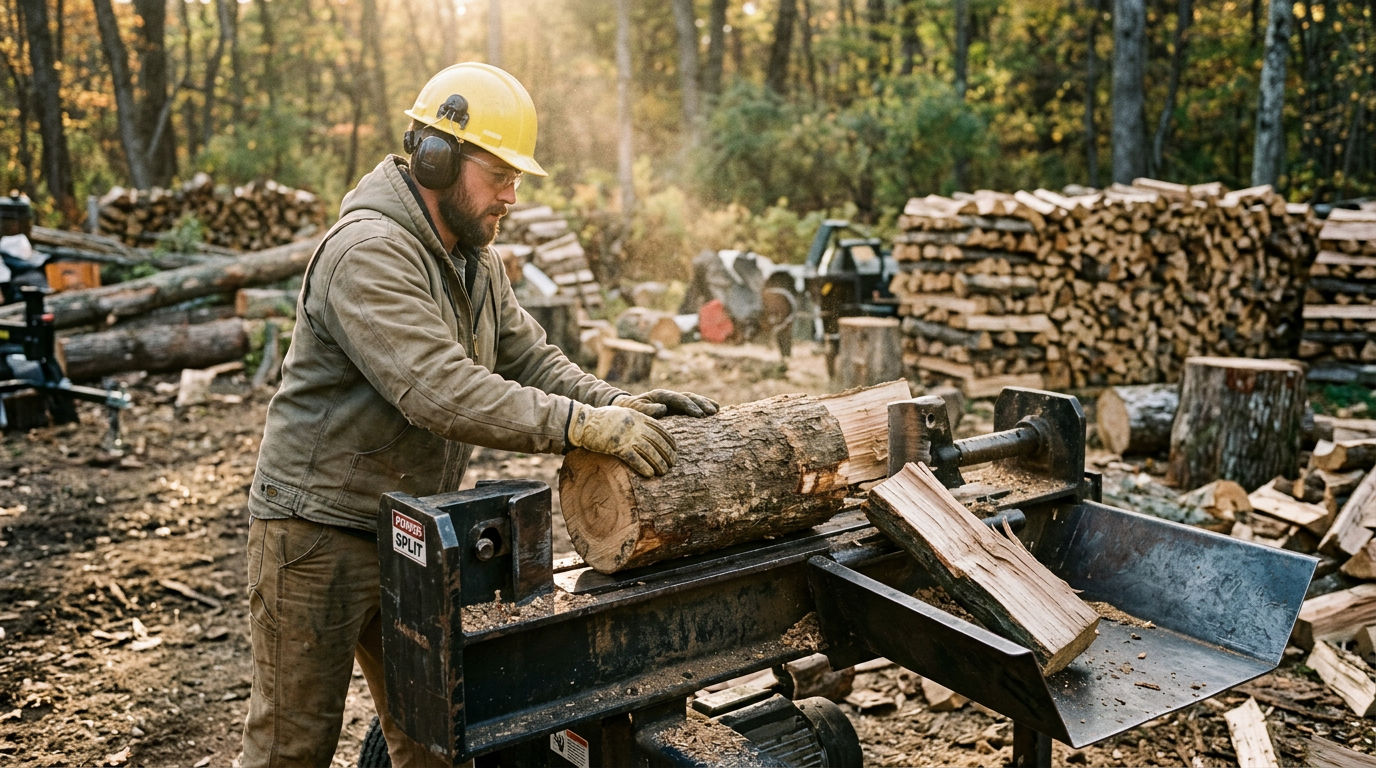
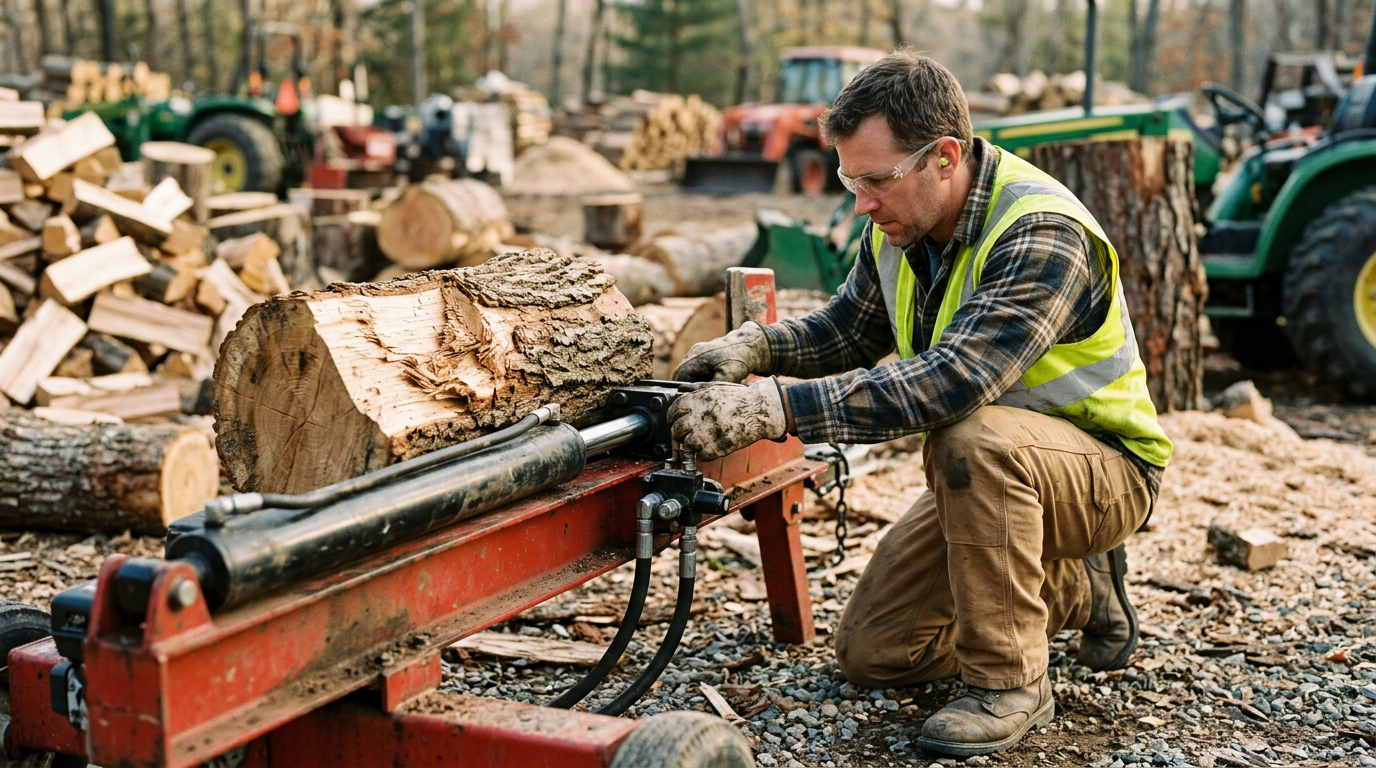
Watch for four warning signs when a splitter begins to fail: a ram that slows or jerks mid-stroke, a flywheel that spins down faster than usual, a wedge that will not fully retract, and rough or stalling engine performance. These symptoms usually trace back to flywheel bearing stress, rack-and-pinion gear wear, and deferred maintenance on the drive mechanism rather than one sudden fault. At Forestry Rentals, we often see DR RapidFire log splitters sidelined by worn flywheel bearings and neglected rack lubrication across the crews we support in Brownstown, IL, North Carolina, and Utah. In commercial settings, OSHA's logging standard requires that each machine be inspected before initial use during each workshift, with defects or damage repaired or the unserviceable machine replaced before work begins. Catching these indicators early keeps DR RapidFire log splitters productive, and pairing them with the right support equipment, such as a stump grinder for post-clearance work, keeps the whole site moving. Need a dependable unit fast? Contact our team to talk options.
-
Flywheel bearings that grind, wobble, or spin down quickly after the engine cuts, signaling worn races or insufficient lubrication.
-
Sluggish or jerky ram movement, often caused by worn rack-and-pinion teeth, a slipping drive belt, or a damaged flywheel key.
-
A wedge that fails to retract fully, a common warning sign of rack-and-pinion binding or flywheel mechanism wear on DR RapidFire log splitters.
-
Hard starting, stalling, or surging engine performance, pointing to stale fuel, a dirty air filter, or fouled spark plugs.
-
Excessive vibration, unusual noise, or overheating during extended cycles, often indicating stressed flywheel bearings, a loose flywheel bolt, or misaligned rack guides.
-
Visible cracks, bent wedges, or loose hardware on the beam and frame from repeated high-impact kinetic loads.
Field Note From Our Technicians
-
Most DR RapidFire log splitters failures start small: a minor leak, a slow ram, or a delayed retract. Treating these early signs as routine maintenance, not annoyances, prevents costly downtime and keeps crews safe on the job. Learn more about our team and service area.
-
4 signs – Core warning signs: leaks, slow ram, a stuck wedge, and rough engine performance
-
Every workshift – Machine inspection required before initial use under OSHA's logging standard
-
3 states – Crews supported across Illinois, North Carolina, and Utah
How Do DR RapidFire Log Splitters Work?
DR RapidFire log splitters work by storing engine power in heavy spinning flywheels, then releasing it in one burst through a rack-and-pinion drive that fires the splitting wedge forward and auto-retracts. An engine spinsone or two massive flywheels, according to DR Power Equipment, building rotational kinetic energy released the instant an operator squeezes the handle. The mechanism rests on established physics: the kinetic energy of a rotating body is proportional to its moment of inertia and the square of its angular velocity, as University Physics explains. Because stored energy discharges almost instantly, DR RapidFire log splitters cycle far faster than fluid-driven units, with no hydraulic pump, hoses, or oil in the drivetrain. For crews comparing DR RapidFire log splitters with conventional models, Forestry Rentals matches the right machine to your wood volume; the kinetic drive wins on speed, and hydraulics suit sustained force on oversized rounds. Browse our full inventory, including skid steer attachments for material handling, or request pricing once your project is scoped.
|
Mechanism aspect |
DR RapidFire (kinetic flywheel) |
Typical hydraulic splitter |
|---|---|---|
|
Energy source |
Engine spins one or two flywheels, up to 75 lbs, per DR Power |
Pump forces oil into a cylinder to build steady pressure, with no flywheel |
|
Cycle time |
Splits in 2.5 to 3 seconds including auto-retract, about 6 times faster than most hydraulic models, reports Mother Earth News |
About 6 times slower per split, driven by steady pump flow |
|
Splitting force |
Power equates to a 22-, 28-, or 34-ton hydraulic unit, per DR Power Equipment |
Rated directly by ram tonnage from the pump and cylinder |
|
Energy scaling |
Stored energy tracks moment of inertia and the square of flywheel speed, K equals half I omega squared, per OpenStax |
Force limited by pump pressure and cylinder bore area |
Ready to Tackle Your Next Project?
Whether you are comparing DR RapidFire log splitters or scaling up for a larger job, we can match the right equipment to your site and timeline. Reach out through our contact page to get started, or check our FAQs for answers to common rental questions.
Frequently Asked Questions About DR RapidFire Log Splitters
How do DR RapidFire log splitters work?
DR RapidFire log splitters use a kinetic, flywheel-driven design rather than a traditional hydraulic pump. Spinning flywheels store rotational energy and release it to drive the splitting wedge through a log, then return the ram for the next cycle. This mechanical approach is built for quick, repeatable cycles, which many operators value for high-volume firewood processing.
Does Forestry Rentals carry DR RapidFire log splitters?
We do not currently carry log splitters in our rental fleet. If you need help sourcing a splitter or want to discuss alternative equipment for your project, contact our team and we will point you in the right direction. You can also browse our current equipment inventory to see what is available.
Are DR RapidFire log splitters safe to operate?
Operate DR RapidFire log splitters with the same caution as any powered splitting machine: read the manufacturer's manual, wear eye and hand protection, keep bystanders well clear, and never place your hands near the wedge while the flywheels are engaged. Because this work falls under broader forestry operations, federal regulators enforce a Logging Operations Standard through OSHA logging safety guidance.
What kind of wood can DR RapidFire log splitters handle?
The material you can split depends on species, diameter, moisture content, and grain. Seasoned, straight-grained logs generally split more easily than green, knotty, or twisted rounds. Match the log size to the machine's rated capacity, and cut oversized or forked pieces down before feeding them. When you are unsure whether a splitter suits your material or job scale, connect with our team for guidance, or check our equipment for sale.